interior monologue- expressing a character's inner thoughts
inversion- the action of inverting something
juxtaposition- the fact of two things being seen or placed close together with contrasting effect
lyric- expressing the writer's emotions, usually briefly and in stanzas or recognized forms
magic(al) realism- magic elements are a natural part in an otherwise mundane, realistic environment
metaphor- a figure of speech in which a word or phrase is applied to an object or action to which it is not literally applicable
vehicles- a thing used to express, embody, or fulfill something
metonymy- the substitution of the name of an attribute or adjunct for that of the thing meant, for example suit for business executive, or the track for horse racing
modernism- modern character or quality of thought, expression, or technique
monologue- a long speech by one actor in a play or movie, or as part of a theatrical or broadcast program
mood- evokes certain feelings or vibes in readers through words and descriptions.
motif- a decorative design or pattern
myth- a traditional story, esp. one concerning the early history of a
people or explaining some natural or social phenomenon, and typically
involving supernatural beings or event
narrative- a spoken or written account of connected events; a story
narrator- the one telling the story
omniscient point of view- narrator is a character in the story, but also knows the thoughts and feelings of all the other characters
onomatopoeia- the formation of a word from a sound associated with what is named
oxymoron- a figure of speech in which apparently contradictory terms appear in conjunction
parable- a simple story used to illustrate a moral or spiritual lesson
paradox- a statement or proposition that, despite sound (or apparently
sound) reasoning from acceptable premises, leads to a conclusion that
seems senseless, logically unacceptable, or self-contradictory
Sunday, January 26, 2014

Wednesday, January 22, 2014
Lit Terms #3
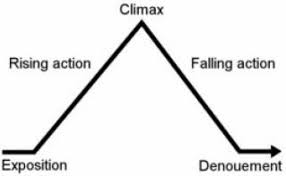
exposition- The beginning
expressionism- a style of painting, music, or drama in which the artist or writer seeks to express emotional experience rather than impressions of the external world
fable- a short story
fallacy- a mistaken belief, esp. one based on unsound argument
falling action- what happens after the climax
farce- a comic dramatic work using buffoonery and horseplay and typically including crude characterization
figurative language- expressing ideas indirectly; language used in a special way to create a special effect made up of words and phrases which don’t mean what they first appear to mean
flashback- a scene in a movie, novel, etc., set in a time earlier than the main story
foil- prevent (something considered wrong or undesirable) from succeeding
folk tale- a story originating in popular culture, typically passed on by word of mouth
foreshadowing- be a warning or indication of (a future event)
free verse- poetry that does not rhyme or have a regular meter
genre- a category
gothic tale- genre or mode of literature that combines elements of both horror and romance
hyperbole- exaggerated statements or claims not meant to be taken literally
imagery- visually descriptive or figurative language, esp. in a literary work
implication- the conclusion that can be drawn from something, although it is not explicitly stated
incongruity- the state of being incongruous or out of keeping
inference- a conclusion reached on the basis of evidence and reasoning
irony- the expression of one's meaning by using language that normally signifies the opposite, typically for humorous or emphatic effect
expressionism- a style of painting, music, or drama in which the artist or writer seeks to express emotional experience rather than impressions of the external world
fable- a short story
fallacy- a mistaken belief, esp. one based on unsound argument
falling action- what happens after the climax
farce- a comic dramatic work using buffoonery and horseplay and typically including crude characterization
figurative language- expressing ideas indirectly; language used in a special way to create a special effect made up of words and phrases which don’t mean what they first appear to mean
flashback- a scene in a movie, novel, etc., set in a time earlier than the main story
foil- prevent (something considered wrong or undesirable) from succeeding
folk tale- a story originating in popular culture, typically passed on by word of mouth
foreshadowing- be a warning or indication of (a future event)
free verse- poetry that does not rhyme or have a regular meter
genre- a category
gothic tale- genre or mode of literature that combines elements of both horror and romance
hyperbole- exaggerated statements or claims not meant to be taken literally
imagery- visually descriptive or figurative language, esp. in a literary work
implication- the conclusion that can be drawn from something, although it is not explicitly stated
incongruity- the state of being incongruous or out of keeping
inference- a conclusion reached on the basis of evidence and reasoning
irony- the expression of one's meaning by using language that normally signifies the opposite, typically for humorous or emphatic effect
Thursday, January 16, 2014
Lit Terms Remix 1-5
1. circumlocution-Circumlocution is a form of writing where the writer uses exaggeratedly
long and complex sentences in order to convey a meaning that could have
otherwise been conveyed through a shorter, much simpler sentence
2. classicism-a high regard for a classical period
3. cliche- Cliche refers to an expression that has been overused to the extent that it loses its original meaning or novelty
Example-
4. climax- The highest point
5. colloquialism
2. classicism-a high regard for a classical period
3. cliche- Cliche refers to an expression that has been overused to the extent that it loses its original meaning or novelty
Example-
- in the nick of time – to happen just in time
- only time will tell – to become clear over time
4. climax- The highest point
5. colloquialism
“Busy old fool, unruly Sun,The poet addresses the sun in an informal and colloquial way as if it were a real human being. He asks the sun in a rude manner that why did he appear and spoil the good tome he was having with his beloved. Not finishing here, he commands the “saucy pedantic sun” to go away.
Why dost thou thus,
Through windows, and through curtains, call on us?
Must to thy motions lovers’ seasons run?
Saucy pedantic wretch,”
Lit Terms #2
circumlocution-the use of many words where fewer would do, esp. in a deliberate attempt to be vague or evasive-tending to avoid commitment or self-revelation, esp. by responding only indirectly
classicism-the following of ancient Greek or Roman principles and style in art and literature
cliche-a phrase or opinion that is overused and betrays a lack of original thought
climax-the highest point
colloquialism-a word or phrase that is not formal or literary, typically one used in ordinary or familiar conversation.
comedy-A dramatic work that is light and often humorous or satirical in tone and that usually contains a happy resolution of the thematic conflict
conflict-A problem
connotation-an idea or feeling that a word invokes in addition to its literal or primary meaning
contrast-the state of being strikingly different from something else, typically something in juxtaposition or close association
denotation-the literal or primary meaning of a word
denouement-the final part of a play, movie, or narrative in which the strands of the plot are drawn together and matters are explained or resolved
dialect- a particular form of a language that is peculiar to a specific region or social group
dialectics- the art of investigating or discussing the truth of opinions
dichotomy- a division or contrast between two things that are or are represented as being opposed or entirely different
diction- The choice or use of words
didactic- Intended to instruct
dogmatic- inclined to lay down principles as incontrovertibly true
elegy- a poem of serious reflection, typically a lament for the dead
epic- a long poem, typically one derived from ancient oral tradition
epigram- a pithy saying or remark expressing an idea in a clever and amusing way
epitaph- a phrase or statement written in memory of a person who has died
epithet- an adjective or descriptive phrase expressing a quality characteristic of the person or thing mentioned
euphemism-a mild or indirect word or expression substituted for one considered to be too harsh or blunt when referring to something unpleasant or embarrassing
evocative- bringing strong images, memories, or feelings to mind
classicism-the following of ancient Greek or Roman principles and style in art and literature
cliche-a phrase or opinion that is overused and betrays a lack of original thought
climax-the highest point
colloquialism-a word or phrase that is not formal or literary, typically one used in ordinary or familiar conversation.
comedy-A dramatic work that is light and often humorous or satirical in tone and that usually contains a happy resolution of the thematic conflict
conflict-A problem
connotation-an idea or feeling that a word invokes in addition to its literal or primary meaning
contrast-the state of being strikingly different from something else, typically something in juxtaposition or close association
denotation-the literal or primary meaning of a word
denouement-the final part of a play, movie, or narrative in which the strands of the plot are drawn together and matters are explained or resolved
dialect- a particular form of a language that is peculiar to a specific region or social group
dialectics- the art of investigating or discussing the truth of opinions
dichotomy- a division or contrast between two things that are or are represented as being opposed or entirely different
diction- The choice or use of words
didactic- Intended to instruct
dogmatic- inclined to lay down principles as incontrovertibly true
elegy- a poem of serious reflection, typically a lament for the dead
epic- a long poem, typically one derived from ancient oral tradition
epigram- a pithy saying or remark expressing an idea in a clever and amusing way
epitaph- a phrase or statement written in memory of a person who has died
epithet- an adjective or descriptive phrase expressing a quality characteristic of the person or thing mentioned
euphemism-a mild or indirect word or expression substituted for one considered to be too harsh or blunt when referring to something unpleasant or embarrassing
evocative- bringing strong images, memories, or feelings to mind
Thursday, January 9, 2014
AP Prep Post 1: Siddhartha
As I searched on Google for good questions the ones I found seemed really easy to answer so I searched the blog's for help and fond that Ian Steller's Blog had more challenging questions.
A. 1. Siddhartha features substantial activity and narrative action. At the same time, it is about one man’s largely internal spiritual quest. What is the relationship between the internal and exterior worlds of Siddhartha? How does Siddhartha negotiate these worlds?
2. Herman Hesse’s novels before Siddhartha focused on alienated young men who rejected the cultures of their upbringings. However, these other novels did not feature the spiritual elements of Siddhartha. How do the spiritual elements of Siddhartha make it different from any other story of an alienated youth?
3. Most literary scholars agree that Siddhartha was prompted by Herman Hesse’s fixation on Eastern spirituality. Is there a case to be made that Siddhartha is designed to celebrate Eastern religion? Is Hesse’s treatment of spirituality as relevant today as it was when he wrote the novel?
4. Siddhartha concerns the quest for spiritual enlightenment, and by the end of it four characters have achieved this goal: Govinda, Gotama, Vasudeva, and Siddhartha. Is the enlightenment achieved by each of these characters the same? Why or why not? What distinctions and similarities exist between the paths these characters use to reach their final goal?
5. Consider Siddhartha’s relationship with Govinda. How are they similar, and how are they different? What are the narrative functions of Govinda’s reappearance throughout the novel? How does their relationship impact the novel’s ending?
B. 1. Internally Siddhartha's world is a big problem with a lot of options and he is having trouble on deciding which path to choose. Externally Siddhartha's world is surrounded by familiar faces that he can choose to stay with or start over. Overall I think that Siddhartha's worlds are connected because they both involve deciding on what to do that will be better for himself.
2. Spiritual elements of Siddhartha make it different from another alienated youth in a story because Siddhartha's spiritual beliefs make him want to do things a certain way or change while other people being alienated in different books can be just because they want to be alone or are shy.
3. I think that the spirituality is still the same as when he wrote the book because peoples beliefs and customs stay the same over time but the people change.
4. I need more information on the other characters to fully answer the question.
5. I need more information on Govinda to answer the question.
These questions show me that the AP Exam will be challenging and that the questions want you to go deeper that usual while answering them.
C. These questions tell me that I need to pay attention and look for more literary elements as I read.
A. 1. Siddhartha features substantial activity and narrative action. At the same time, it is about one man’s largely internal spiritual quest. What is the relationship between the internal and exterior worlds of Siddhartha? How does Siddhartha negotiate these worlds?
2. Herman Hesse’s novels before Siddhartha focused on alienated young men who rejected the cultures of their upbringings. However, these other novels did not feature the spiritual elements of Siddhartha. How do the spiritual elements of Siddhartha make it different from any other story of an alienated youth?
3. Most literary scholars agree that Siddhartha was prompted by Herman Hesse’s fixation on Eastern spirituality. Is there a case to be made that Siddhartha is designed to celebrate Eastern religion? Is Hesse’s treatment of spirituality as relevant today as it was when he wrote the novel?
4. Siddhartha concerns the quest for spiritual enlightenment, and by the end of it four characters have achieved this goal: Govinda, Gotama, Vasudeva, and Siddhartha. Is the enlightenment achieved by each of these characters the same? Why or why not? What distinctions and similarities exist between the paths these characters use to reach their final goal?
5. Consider Siddhartha’s relationship with Govinda. How are they similar, and how are they different? What are the narrative functions of Govinda’s reappearance throughout the novel? How does their relationship impact the novel’s ending?
B. 1. Internally Siddhartha's world is a big problem with a lot of options and he is having trouble on deciding which path to choose. Externally Siddhartha's world is surrounded by familiar faces that he can choose to stay with or start over. Overall I think that Siddhartha's worlds are connected because they both involve deciding on what to do that will be better for himself.
2. Spiritual elements of Siddhartha make it different from another alienated youth in a story because Siddhartha's spiritual beliefs make him want to do things a certain way or change while other people being alienated in different books can be just because they want to be alone or are shy.
3. I think that the spirituality is still the same as when he wrote the book because peoples beliefs and customs stay the same over time but the people change.
4. I need more information on the other characters to fully answer the question.
5. I need more information on Govinda to answer the question.
These questions show me that the AP Exam will be challenging and that the questions want you to go deeper that usual while answering them.
C. These questions tell me that I need to pay attention and look for more literary elements as I read.
Wednesday, January 8, 2014
Hacking My Education
What do you want to know by the end of this course that you didn't know now?
What skills do I want to be able to demonstrate on my blog?
What experiences do I want to get under my belt before I graduate?
These are simple questions as you read it but are very complex when it comes to the answer. To be honest there is so much that myself and everybody else can know to help us. The main thing for me would just be to get a feel of the college life before I go so that way it is not that big of a transition from high school to college. On my blog I want to be able to show that I am a good thinker and open to learning in different ways. Before I graduate I would just like to again get a little taste of the college experience so that way it is not a big shock for me.
What skills do I want to be able to demonstrate on my blog?
What experiences do I want to get under my belt before I graduate?
These are simple questions as you read it but are very complex when it comes to the answer. To be honest there is so much that myself and everybody else can know to help us. The main thing for me would just be to get a feel of the college life before I go so that way it is not that big of a transition from high school to college. On my blog I want to be able to show that I am a good thinker and open to learning in different ways. Before I graduate I would just like to again get a little taste of the college experience so that way it is not a big shock for me.
Tuesday, December 10, 2013
Life After This Blog Post
I juts finished writing my letter to my future self and I am curious as to what I said to myself last year. I think that it will be different though because I have changed from the last time I wrote this letter.
Subscribe to:
Posts (Atom)